
“Music is society’s medicine”
04 | 05 | 2023A conference dedicated to ‘Music in the Comunidad Valenciana’ was held, featuring contributions from experts and a chamber music concert to round off the event
The Foundation has held a conference dedicated to Music in the Comunidad Valenciana, which featured discussions on musical societies and their history in the region, as well as an in-depth examination of the current Valencian music scene.
The event featured the academic consultant for ESMAR (Higher School of High-Performance Music), Manuel Tomás, for whom “musical societies are a backbone of the Valencian Community, with 550 musical societies, over 1,000 brass bands, more than 47,000 musicians, nearly 60,000 students, more than 200,000 members, 600 educational centres and more than 5,000 teachers, with nearly a million supporters”, which, according to Tomás, “is something that happens nowhere else in the world”. The music expert has championed the figure of the Valencian amateur musician, “people who, with barely any ability to read or write, would go to play music after finishing their working day in the fields or in the factory. Many of them, illiterate or almost so, enjoyed their contact with music; in fact,” Tomás continued, “95 per cent of the bands were made up of this sort of person”.


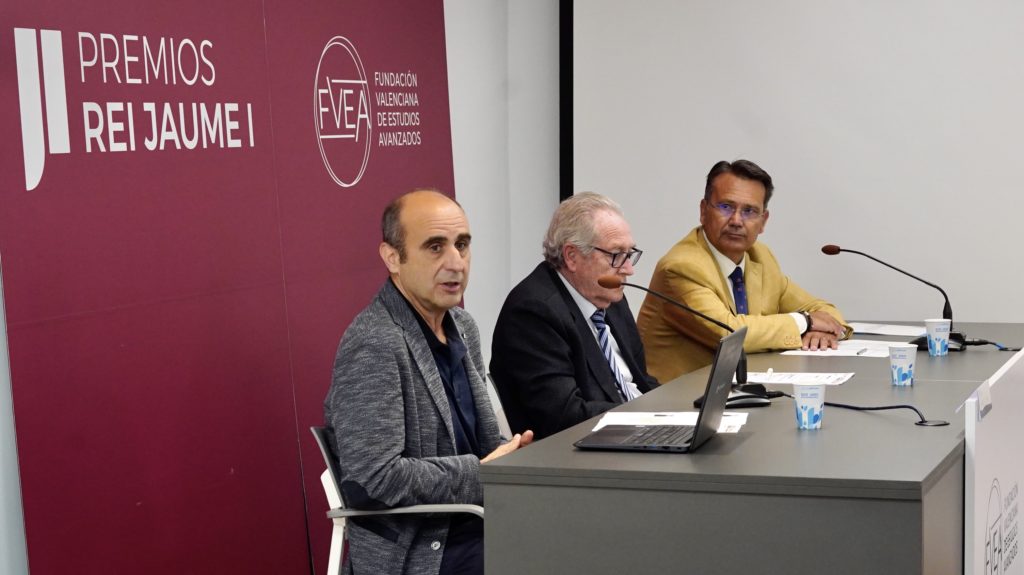

Tomás spoke about the musical societies, “which are present throughout the Valencian region and serve as a backbone and a major force for social cohesion,” he said. He also explained how “legally, they are non-profit organisations, born out of Valencian civil society with a history stretching back almost 200 years, which proliferated in the second half of the 19th century and have continued to grow ever since”.
For Tomás, who is also the coordinator of this event, “musical societies were originally a rural phenomenon, but they have now also taken root in the city of Valencia, as the practice of music in the streets is an expression aligned with the concept of ‘Mediterranean identity’, in which the pairing of ‘music and celebration’ is ever-present.”

The subsequent discussion was moderated by Alejandro Monzonís, CEO of Iale International School, who expressed his hope that the subject of music would be given the importance it deserves, as “music enhances logical reasoning, fosters critical and analytical thinking, and if a child, is exposed to a musical instrument from a young age, we will be helping them to improve those skills,” he said.


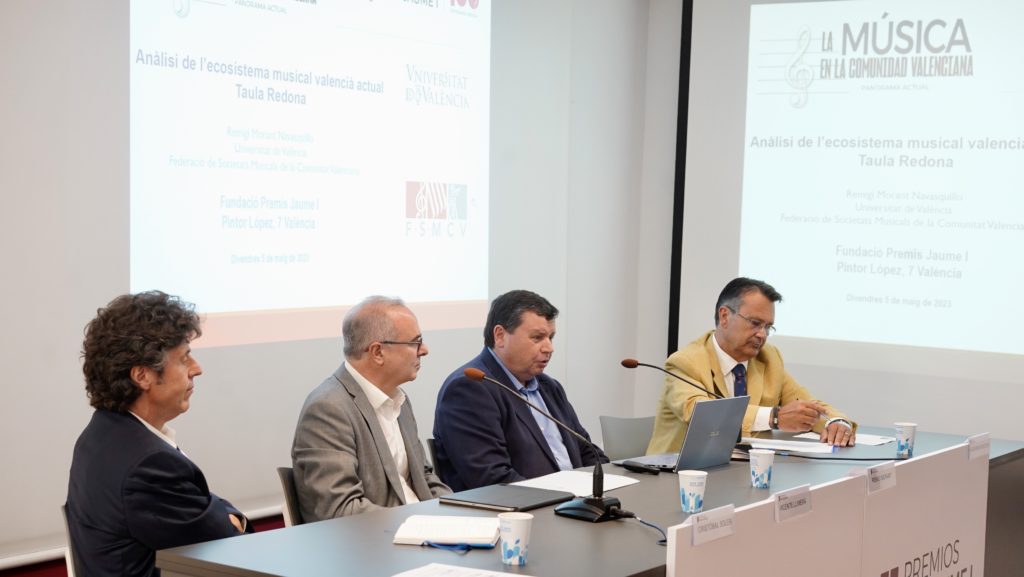

To analyse the Valencian music scene, the vice-president of the Federation of Musical Societies of the Valencian Community, Remigi Morant, boasted that “we in the musical societies did not feel the economic crisis; on the contrary, enrolment figures have risen because parents felt it was a safe bet for their children to study music”, whilst Vicente Llimera, professor of oboe at the “Joaquín Rodrigo” Higher Conservatoire of Music in Valencia, explained the various higher education music programmes in the region, such as the ECTS, “the European recognition programme, such as Erasmus, which has enabled us to interact with other countries and develop joint European programmes”. Llimera also emphasised the fact that “today, 60 per cent of music graduates hold a PhD, and the qualifications framework now brings us into line with Europe”.
To conclude this discussion, the Maestro and Conductor, Cristóbal Soler, expressed his delight that “the fact that a foundation such as the one behind these awards has approached us is in itself a source of pride and speaks volumes about our society”. At various points during his speech, Soler expressed his gratitude to the musical societies, from which all young Valencian musicians emerge, “because thanks to these societies, we have the best musicians in the world”, he stated emphatically. He also expressed his satisfaction that “the world is beginning to recognise us, as in Vienna with the University of Valencia Orchestra, which exists thanks to the pool of talented young people and which, since 2003, has meant that Spaniards now make up the majority of the successful European Gustav Mahler Orchestra, where we had virtually no representation just a few years ago”. Finally, the young conductor paid tribute to music as “the medicine of society, as it is a form of knowledge that saves and heals”.

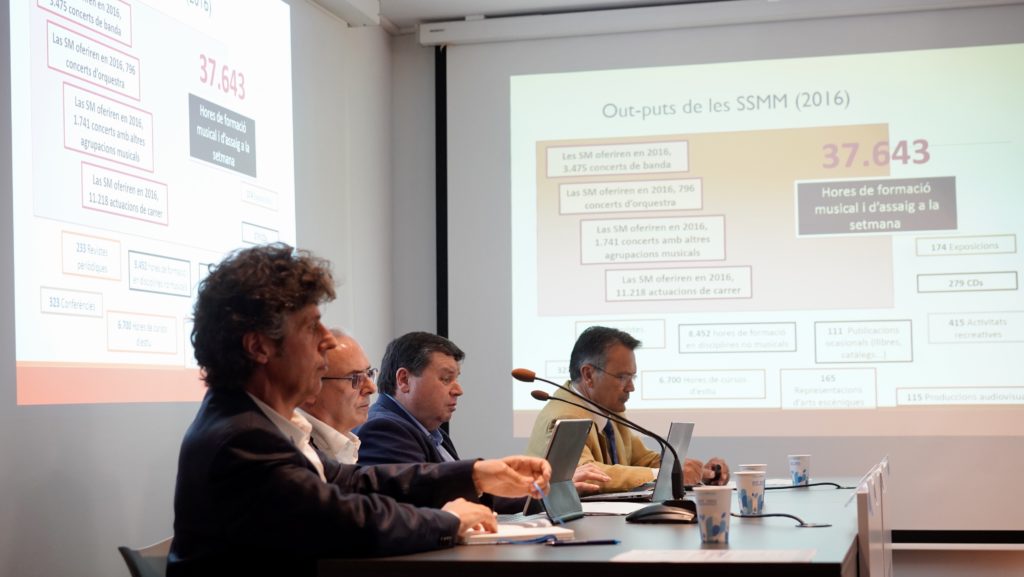
To conclude, a tribute was paid to music with two saxophone and wind quartets from ESMAR, who performed two short pieces of chamber music.


